The Sunday roast in Abu Dhabi is one of the most specific dining formats in existence. It has a structure, a sequence, and a set of expectations that have barely changed in decades: a roasted centrepiece, roast potatoes, a selection of vegetables, gravy, and something for dessert. Do it well, and it delivers something that no other meal format quite replicates. Do it badly, and everyone at the table knows immediately.
The Marcella Asado Domingo, a Spanish Sunday roast in Abu Dhabi, keeps the structure but changes the logic behind it. It is a Spanish tradition applied to the Sunday lunch format in a way that makes both better. Here is what that actually means on the plate.
What Asado Means
The word ‘asado’ comes from the Spanish and Latin American tradition of cooking over fire: slow heat, direct flame, and the kind of patience that produces meat with a crust on the outside and a texture inside that no oven can replicate. An asado is also a social occasion. It is built around a table, around time, and around the understanding that the meal is the event rather than something to get through before the afternoon starts.
Domingo means Sunday. Put the two together, and you have the philosophy behind Marcella’s format: a fire-led Sunday lunch built for a table that is not in a hurry.
Where It Diverges from the Traditional Roast
The traditional Sunday roast arrives as a composed plate: the protein, the potatoes, the vegetables, and the gravy, all presented together. It is a single decision followed by a single plate. The Asado Domingo works differently.
The meal opens with shared tapas: croquettes of the day, the Bikini Hemingway on toasted pan cristal with Manchego and chorizo, house sourdough with cultured butter, 18-month Cecina ham with smoked piparra peppers, potato and caramelised onion tortilla with saffron aioli, and albondigas meatballs with paprika and cumin. These are not canapés or amuse-bouches. They are a proper first act that sets the tone of the meal and gives the table time to settle before the main arrives.
The Main: Where the Fire Does Its Work
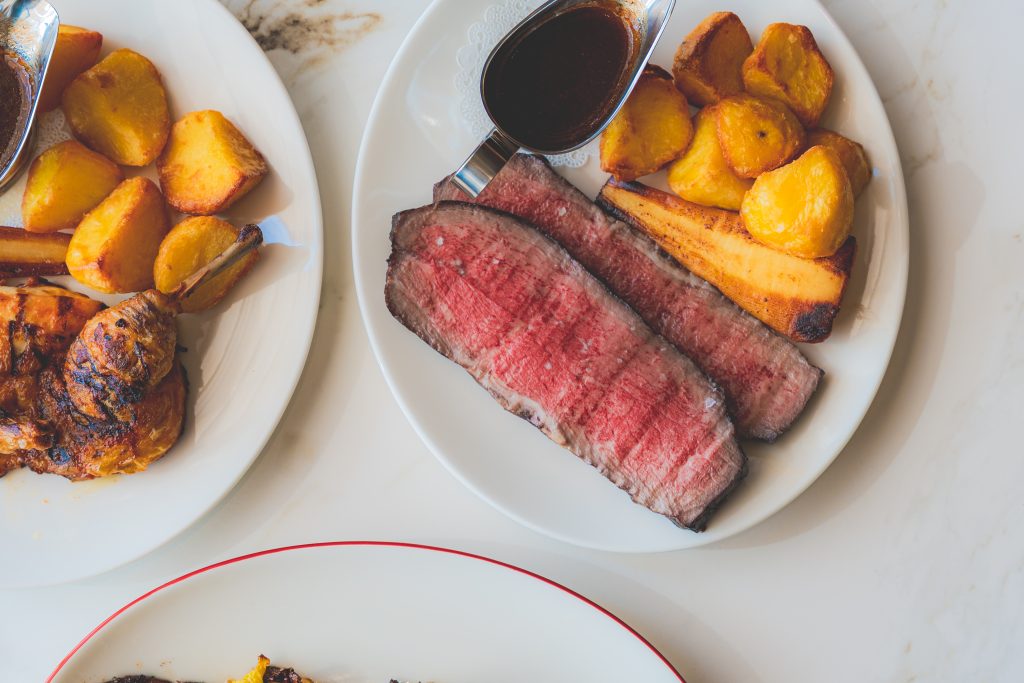
The choice of main at the Asado Domingo is between the 35-day-aged rump of beef served medium-rare, the half-roasted chicken, and the roasted hispi cabbage with parsley sauce and breadcrumbs for those who want a vegetarian option. All three are served with beef-fat-roasted potatoes; roasted Hispi cabbage with parsley sauce and breadcrumbs; parsnips with brown butter and thyme; and red wine gravy.
The accompaniments are where the two traditions converge most directly. Beef fat roast potatoes and red wine gravy are not Spanish inventions, but they work here because the kitchen treats them with the same seriousness as the rest of the menu. The beef fat gives the potatoes a crust and a depth that vegetable oil cannot produce. The red wine gravy is made from a proper reduction rather than a powder.
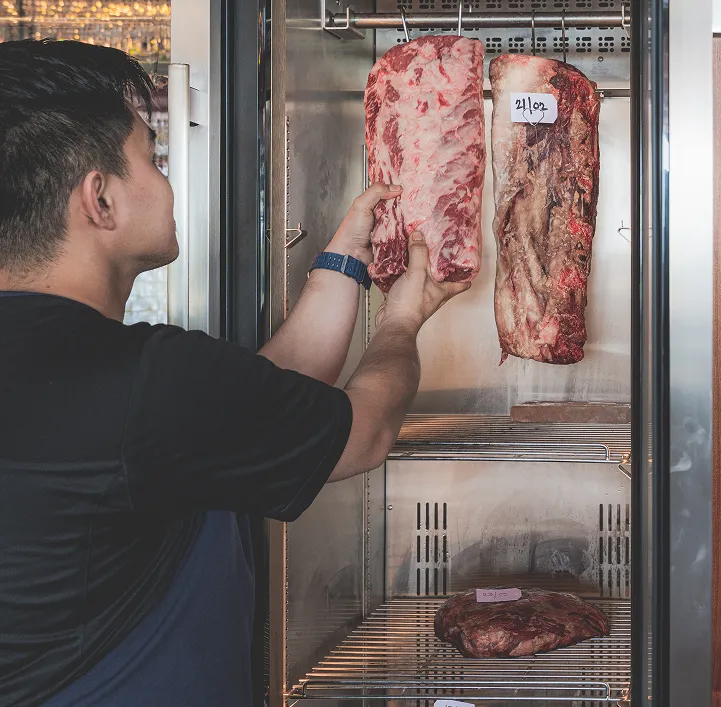
The 35-day-aged rump of beef is the order that most clearly demonstrates what the Asado format adds to the Sunday lunch occasion. Dry-aged beef cooked to medium rare on a wood-fired grill has a different quality to a joint roasted in an oven. The crust has smoke in it. The interior has a tenderness that comes from the ageing process rather than from cooking it longer. These are not marginal differences.
Dessert: The Spanish Close
The Asado Domingo closes with a choice between Rey Silo blue cheese with brioche and paprika honey or dark chocolate mousse with olive oil and sea salt. Neither is a traditional Sunday pudding. The blue cheese course in particular is a specifically Spanish and European way of closing a meal: something savoury and complex that extends the table rather than ending it with something sweet.
The dark chocolate mousse with olive oil is the dessert that surprises people who expect something heavier. The olive oil cuts the richness of the chocolate and keeps the portion from feeling like too much at the end of a long meal. The sea salt does what sea salt is supposed to do on chocolate. It is a cleaner, lighter close than most Sunday roast desserts manage.
The Asado Domingo is AED 194 per person and runs every Sunday from 12 PM to 4 PM at Marcella on the Yas Bay waterfront. The format covers the full three-course structure: shared tapas, choice of main with all accompaniments, and dessert. For the full menu and to book, see the Spanish Sunday roast at Marcella
Reservations are strongly recommended. For groups of six or more, booking in advance is essential.
Reserve a table: | Call: +971 56 545 7290 | Email: manager@mymarcella.ae
FAQs
What is the difference between the Asado Domingo and a traditional Sunday roast?
The Asado Domingo begins with a full round of shared tapas before the main course, which is not part of a traditional Sunday roast format. The cooking method also differs: the beef is dry-aged and wood-fire grilled rather than oven-roasted, giving it a different crust and depth of flavour.
How much does the Asado Domingo cost?
AED 194 per person, inclusive of shared tapas, choice of main with all accompaniments, and dessert.
What main courses are available at the Asado Domingo?
35-day aged rump of beef served medium-rare, half roast chicken, or roasted Hispi cabbage with parsley sauce and breadcrumbs. All mains are served with beef-fat roast potatoes, parsnips with brown butter and thyme, and red wine gravy.
What time does the Asado Domingo run?
Every Sunday from 12 PM to 4 PM at Marcella, Yas Bay waterfront, Yas Island, Abu Dhabi.
Do I need to book in advance for the Sunday roast at Marcella?
Yes. Reservations are strongly recommended. For groups of six or more, booking ahead is essential. Contact the team at manager@mymarcella.ae or call +971 56 545 7290.